


Do you ever look down at your feet and realize you’re sprinting even though you couldn’t remember standing up to walk in the first place?
Not in a literal, feet-on-pavement sense, of course. But professionally? Sometimes an entire day flies by and in the end, while my shoulders don’t seem any lighter, I feel like I never stopped working.
If you've recently felt like you're working just as hard but covering less ground, you're not alone, and you’re not imagining it.
You're just over there delivering. You're busy all the time. But tech innovations are developing all the time, too, and, somewhere just upstream, decisions are being made – about tools, workflows, strategy – that speed up the current you’re trying to manage.
Don’t panic; we’re all in the same boat. But that feeling that the targets keep moving is worth your attention. This piece is about building the habits that help you keep up, catch the best opportunities, and stay sharp enough to have a meaningful voice at that table up the river.
#1: Discernment Is a Secret Super Skill
Rapid change and constant developments might trigger a natural instinct to consume more: more articles, more newsletters, more conference sessions, more LinkedIn scrolls. And that’s not a bad reflex! Some of that content is going to be genuinely useful. But after a certain point, some of it just becomes noise.
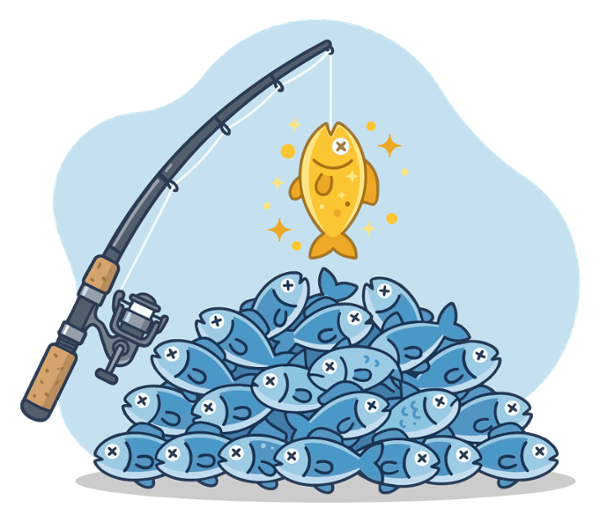
Instead of casting too wide a net and trying to draw in everything it catches, focus on discernment: a developed ability to recognize what matters, what's worth acting on, what deserves a deeper look, and what can be safely deemphasized. This is a learnable skill, and it's an oft-unnoticed differentiator among professionals who navigate change really well.
It’s also a skill you build through practice so, counterintuitively, start by casting that wide net. Read broadly enough to build your vocabulary and discover what’s interesting and relevant to you. Peruse a lot, paying attention to which newsletters, headlines, and thought leaders deliver insights that affect your clients and your work. Regularly ask yourself what it all means for you, specifically.
Can’t come up with anything? No worries – ditch that source and move to the next. Can’t write fast enough to capture everything? That’s a gold mine and it should be flagged in your inbox for a close read, every single time.
The legal profession, especially legal AI, is changing quickly enough that you’ll need to go on these fishing expeditions periodically. That’s okay – embrace the learning opportunity and build it into a habit that feels natural and goes faster each time.
Eventually, skillful discernment will help you walk into a meeting and say something useful, timed just right and delivered exactly as your audience needs to hear it, rather than just reciting a quick summary of an interesting article you stumbled upon a week or two ago.
#2: Go Deep on What Matters Most to Your Work
If you’ve done your discernment well, you’ll lessen the legal-occupational hazard of stressing about everything. Discerning what matters to you, your clients, your role, and your career will help relieve some of that pressure.
But, once you’ve found your green flags, the real work begins. Identify the two or three areas most directly connected to the work you do every day and follow those with honest curiosity and intellectual depth.
When a new headline catches your eye, let your discerned anchors do the filtering work for you – test it against them first. Does this news affect your clients? Does that tool change how your team works? Does this AI-related skills workshop cover a risk or an opportunity you need to understand?
Focused expertise tends to be more professionally valuable than broad familiarity. You don’t want to be a jack of all trades and a master of none. Having something concrete, strategic, and specific to contribute when major conversations come up – that’s where you want to be.
#3: Protect Your Slow-Thinking Time
Once you’ve learned how to spot the signal in all the noisy content that’s available to you, you need to figure out how to synthesize what you’re taking in – to turn that information into an insight crystallized by your unique perspective.
Unfortunately, synthesis doesn't happen automatically. It requires a different kind of focus than reading or attending sessions: more individual, slower, more deliberate. Build in time for that. Even a really modest protected window – thirty minutes a week, maybe, or a longer block monthly – spent reviewing some notes from what you've taken in, forming and challenging your own opinions, and connecting new ideas to what you already know, pays compounding dividends.
When you’re in the regular swing of things at the office, hold yourself accountable for this exercise. Drop links of great articles or excerpts from particularly interesting newsletters into a notes app, or Copilot, or ChatGPT – whatever works for you. Revisit them during these blocked moments, on your own and maybe sometimes with colleagues; chat about it with the AI assistants available to you. Casual, exploratory thinking and conversation aids absorption and will make it easier for you to articulate a unique POV in your next meeting with leadership.
This is one of the reasons I find structured learning environments – including conferences like RelFest – so valuable. Being in a dedicated space with a focused agenda, away from your inbox, and acting like a student for a day (or three), makes room for the kind of reflection that's hard to carve out at your desk.
#4: Build a Network That Keeps You Current
There's a kind of knowledge that lives in articles and keynotes, and there's a kind that lives in your peers. You gain a lot from both, of course, but the colleague who has actually implemented the workflow you've been reading about – they’ve hit the walls, found the workarounds, formed real opinions about whether it's worth it – can offer perspectives and advice you simply cannot get from a byline.
Building your network actively, rather than accumulating connections passively, is one of the best investments a professional in a fast-moving field can make. It means showing up to industry events with genuine curiosity about what other people are experiencing, not just what you can learn from the stage. It means following up with the person you had a good conversation with at lunch. It means being someone who shares what they know, too, because that's how community works.
Over time, your network becomes an intelligence source, a lead factory, and a reputation builder. The relationships you invest in now can expand your awareness and your influence in ways that are much too easy to underestimate.
#5: Let Hard Moments Teach You Something
Real talk: we don’t all get it right every time. Every one of us has moments where a conversation goes somewhere we can't quite follow, or a client asks a question we’re not yet equipped to answer. These moments are uncomfortable. Sometimes they stick in your brain, like cruel little splinters, for weeks. But, begrudgingly, I must say: they can also be kind of useful.
Think of them as diagnostic markers: specific, actionable, ugly little data points that tell you where to focus your learning energy next. Rather than treating these stumbles as evidence of falling behind, think of them as a map. They're pointing somewhere.
So follow them.
Staying curious about what you don't know yet is one of the more underrated habits of people who advance steadily in uncertain fields. These periodic slices of humble pie will help keep your learning targeted rather than scattered, and they tend to produce the kind of fluency – hard-earned, specific, grounded in real questions – that sticks in your brain for longer and shines brightly in high-stakes conversations.
#6: Take Time to Teach the Things Worth Sharing
When you return from a conference or come up for air after a focused sprint of learning, you’re carrying something precious. Whether it’s a fresh perspective, some new context, or firsthand exposure to what your industry peers are thinking and doing, it’s worth quite a lot – and not just to you.
Distilling what you’ve learned into something shareable will make you a go-to subject-matter expert for your team. You’ll be dazzled by just how much a brief team recap, playful lunch-and-learn, or well-framed observation dropped into a strategy conversation can create organizational value that other people notice.
Between you and me, it’s also how you build the kind of professional authority that advances a career.
The habit of sharing what you learn might seem like a small one, but the returns it delivers tend to be anything but.
You Already Have What It Takes
Staying sharp in a fast-moving field requires you to stay continuously engaged – but if you’re thoughtful about it, “continuously engaged” really can look more like curious and connected and well-oriented rather than burnt out or overwhelmed. It also pays off by helping you contribute meaningfully to the conversations that are shaping your profession.
Believe me when I say, even in this way-too-exciting moment to be in legal, that’s an achievable goal. This inflection point is where brilliance is born! And it starts with small, consistent investments: in your own thinking time, in your network, in the focused learning that builds real expertise rather than vague awareness.
If you’re looking for a good place to make one of those investments, put RelFest Chicago on your list (an early bird rate is available until August 20). It’s built to foster the kind of concentrated, immersive learning that sends you back to the office ready to lead. But first, please say "hi!" if you see me there! I’d love a chance to learn with you.
Graphics for this article were created by Kael Rose.