



“If you always do what you’ve always done, you’ll always get what you’ve always got.” – Henry Ford
It was clear from the start that legal operations consultancy Start Here HQ’s webinar would be outside the box. The midday program began with two minutes of guided meditation and a candid request for singular focus.
“We know that you’re busy … if you’ve got other things weighing on your brain that are more important or more urgent, feel free to go do them,” said John Grant, co-founder and process improvement lead at Start Here HQ. “Otherwise, I hope that you’ll be present.”
The webinar’s goal: offer up new ideas around attorney productivity, inspiration to try new methods, and reassurance that change will be hard—but worth it.
We sat in—it was excellent. Here we offer key takeaways from the program for our attorney readers.
Mono-tasking is the new multi-tasking.
Real talk: multi-tasking doesn’t work.
People can claim to juggle many tasks at once—but most only succeed in doing a mediocre job at each, or leaving many half-completed. Productivity outcomes are worse for people who claim to be good at multi-tasking—they tend to try to toss more balls in the air, with greater likelihood of losing track of them.
If multi-tasking doesn’t work, how can we train ourselves to become “mono-taskers” in a fast-paced, ultra-distracted, and distracting world?
Much stress comes from merely trying to hold all of our to-dos in our brain—especially in the legal field, when attorneys regularly juggle many clients, matters, and deadlines. This challenge is compounded the more we collaborate with others, who can’t see our brain’s list of all our “in progress” tasks.
Kanban, one method particularly geared toward mono-tasking and collaboration and discussed on Start Here HQ’s webinar, is a visual system for brain-dumping everything you need to do on sticky notes, then organizing those by priority into columns. Capturing everything means you can stop worrying about the universe of priorities and focus only on today’s, limiting yourself to one thing until it’s done. Only then do you move on to the next.
Audience members chimed in with their preferred methods for seeking mono-task-ism:

Choosing a new method is only a quarter of the battle—the other three quarters are about sticking to it.
When Trying New Productivity Methods …
… start small and simply.
Making lasting changes requires self-awareness that what you’re currently doing isn’t working. Like forming any other habit, be intentional about the new way you’ll do your work and set up your workflow to encourage keeping those habits.
Start small and simply; add slowly. “Don’t jump straight into ultra-sophisticated systems,” says Grant. “Give your new habit a chance to stick—which some experts say could be 90 days.”
… get an accountability partner.
Find an accountability partner to share success and struggles and help keep you honest. If you know you’ll be talking to your accountability partner Friday morning, you’ll be more likely to update your system Thursday night. Once you hit the three-month mark, celebrate. Your new way is getting engrained as a habit.
Whether it’s a colleague or friend, another attorney or affinity group member—find someone else who’s interested in growing and motivate each other.
… remember that time-blocking is a super power.
Regardless of your productivity method, blocking off time in your calendar for specific tasks is a secret of the ultra-productive. It means getting hyper-focused on your priorities and allocating time for them.
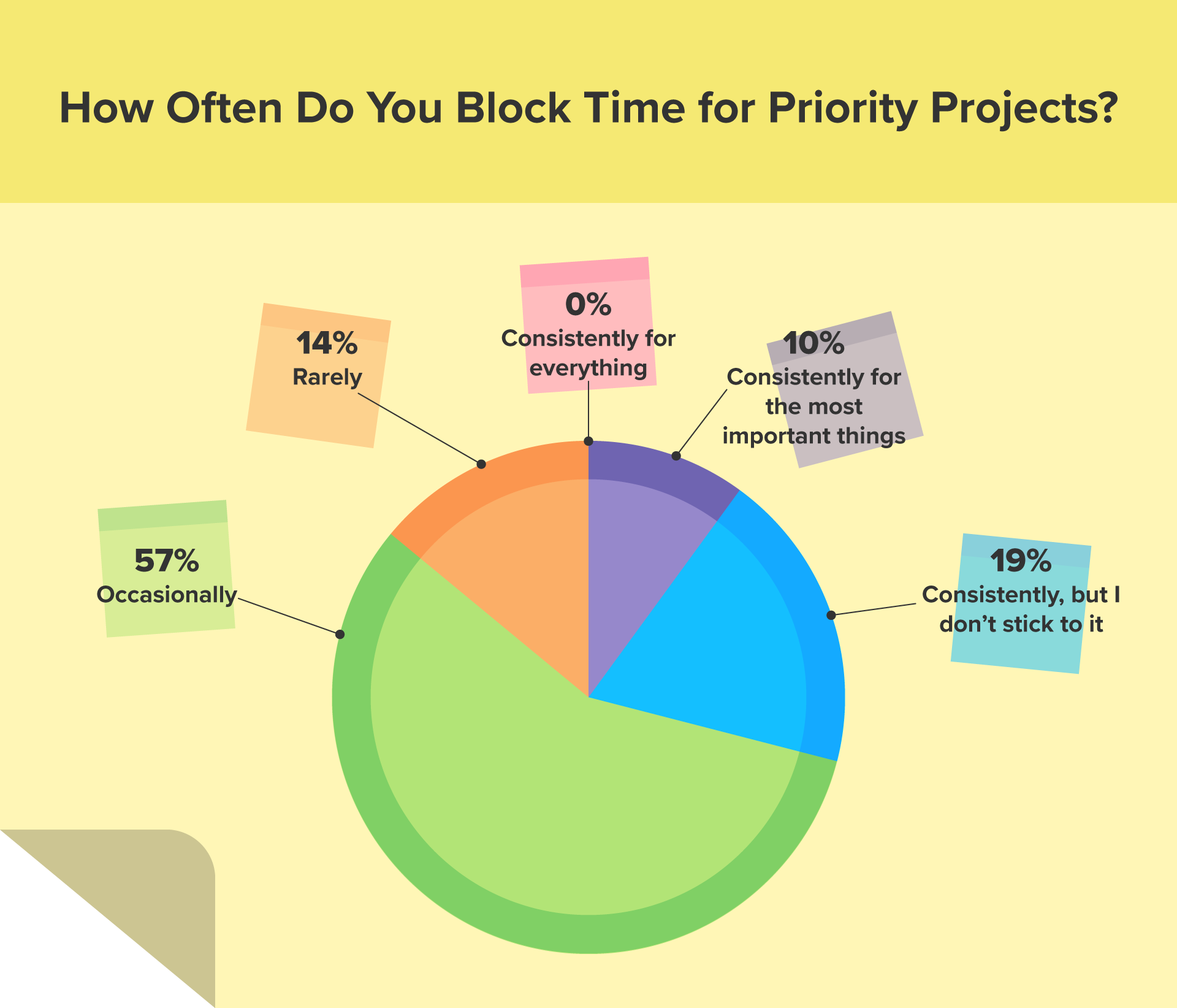
As a webinar audience, we demonstrated that knowing and doing are distinct disciplines. When asked how consistently we block off time in our calendars to work on our priorities, the majority of us had a confession to make:
“Time-blocking and Kanban are a match made in heaven,” said Cat Moon, co-founder and legal designer at Start Here HQ and webinar presenter.
Rebrand Your Checklist: Think “Quality Control,” Not “To Do”
What would happen if you stopped thinking of your checklist as tasks to tick off, but instead as a means of quality control? And what if you and your teammates extended this mindset for all of your litigation projects?
Grant shared a story from the medical field about the profound impact this mindset shift can have.
Critical care specialist Peter Pronovost wondered, what if we created a checklist to outline the necessary steps to avoid infections when inserting lines from medical devices into patients? Not so much a to-do list but a quality control list, with a list of conditions that must be met in order to insert a line safely.
Pronovost, Grant says, documented the five steps necessary to insert a line safely (doctors wash their hands with soap, clean the patient’s skin with chlorhexidine antiseptic, etc). Some doctors scoffed—they were steps that even a novice would know. Still, Pronovost asked his pre-op teams to follow the checklist for a month and record their compliance with each step.
The findings? For about a third of patients, the team skipped at least one step.
The following month, Pronovost got hospital administration support to empower nurses to stop doctors who’ve skipped steps in the checklist. After a year, the ten-day line-infection rate dropped from eleven percent to zero. After two years, only two infections occurred. Codifying an “obvious to-do list” as an outline of quality control conditions had prevented 43 infections and eight deaths (and saved $2 million).
The story, Grant says, is much like pre-flight checklists, an accepted norm. Pilots and inflight crew review the checklist to ensure conditions are met—what are all the necessary things that must be true to have a safe flight and get passengers to a destination? Any staff member is empowered to question items on the checklist in the name of a safe flight—regardless of rank or role.
What if legal teams treated case checklists not as “to-dos” but as quality control measures to ensure they’re meeting minimum expectations and delivering consistent results for clients?
With the constant barrage of tasks to complete, time for strategic reflection is hard to come by. Above all, the webinar imparted one agile idea: As you’re outlining your priorities, build in time to re-evaluate your productivity methods and consider trying something new.