

AI has rewritten the expectations for nearly every legal operation today. The pressure to move faster is real, but so is the obligation to document, explain, and stand behind every decision that matters. The teams navigating this well aren't compromising on speed or rigor.
Ankur Malik and CJ Mahoney, two of Relativity's 2026 AI Visionaries, have thought carefully about what responsible AI adoption looks like in practice. Ankur, global head of forensic technology & e-discovery at Clifford Chance, and CJ, partner and global head of e-discovery and litigation technology at Cleary Gottlieb Steen & Hamilton LLP, both bring years of experience in legal data and technology – and they're sharing what they've learned for the teams navigating AI adoption when the pressure is real, the deadlines are firm, and someone’s itching to ask you to show your work.
Testing Your Way to Confidence
For many teams, the first challenge of AI adoption isn’t technical – it’s simpler and more human: knowing where to begin. That's where CJ Mahoney focuses his energy.
"Doing something new can be scary," CJ says. "But realizing the quality improvements and efficiencies that AI can offer is really important. There are strategies that we deploy to make the leap more comfortable: we test on prior matters, we use it as a quality control tool, we use it in parallel with traditional approaches on cases. Only once we have seen results from these approaches do we start to use it to replace pieces of more traditional approaches.”
The idea is to let results build the case for broader adoption, rather than asking teams to take it on faith.
CJ also addresses an unspoken confidence gap. Many lawyers assume effective AI use requires deep technical skills they don't have. "There are plenty of skilled AI developers in the industry and there are plenty of incredible legal experts,” he says. “Only a small percentage of lawyers effectively bridge the gap.” But generative AI is changing that equation. Unlike earlier approaches that demanded fluency in data science and complex retrieval techniques, today's AI tools rely primarily on natural language prompting – and that, CJ argues, plays directly to lawyers' strengths.
“Many of the skills we develop as litigators are the same skills that are required to effectively interrogate data through prompts," he says. The parallel is intuitive: crafting precise, probing questions – whether in a cross-examination, a deposition, or a set of interrogatories – is already core to a litigator's craft. Prompting is simply that skill applied to a new medium.
Why Defensibility Is Not Optional
While AI changes a lot about how legal work gets done, it doesn't change what legal work is for. The obligation to document, explain, and defend every meaningful decision has always been there.
As Ankur puts it: "Discovery isn't an abstract exercise. It shapes decisions, costs, and outcomes, and it determines whether the record reflects what actually happened."
Now that AI has entered the picture, that accountability is more consequential than ever.
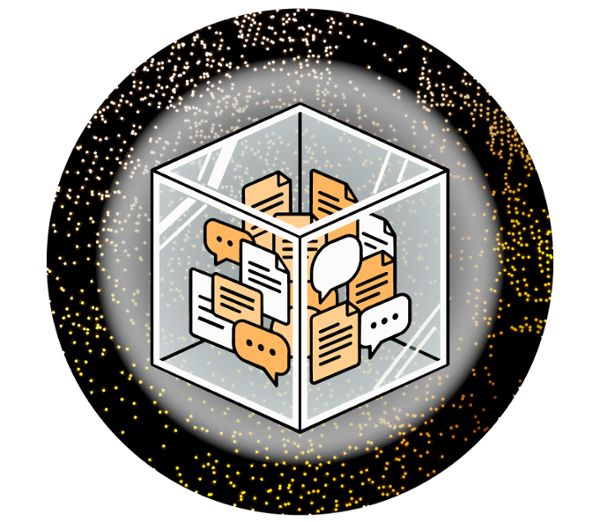
Depending on how systems are configured and what's retained, the artifacts AI generates – prompts, chats, automated transcripts – may surface as discoverable ESI, if relevant and not protected by legal professional privilege. In other words, the record now encompasses not just what your team reviewed, but how they reviewed it, which means anyone that hasn't thought carefully about AI governance is already carrying more risk than they realize. As he puts it, “You can automate repeatable patterns, but you cannot automate professional judgment or accountability.”
Ankur believes that the organizations pulling ahead are the ones that treat every AI-assisted decision as something that will eventually need to be explained and structure their workflows accordingly.
Building Traceability into the Workflow
For Ankur, responsible AI adoption in discovery, disclosure, and document review workflows starts with a simple but crucial reframe: treat every AI output – every prompt, every generated summary, every automated transcript – as a matter artifact. Keep a record of it. As he puts it: "The point isn't to automate responsibility; it's to remove friction, so the team spends less time pushing buttons and more time thinking about what the evidence is really saying."
That mindset extends to vendor relationships too. Before committing to any AI tool, Ankur recommends asking the questions most teams skip in the excitement of a good demo. Where does your data go? What gets retained? Is anything used to train models outside your enterprise environment? And critically – can you get that in writing? "If a vendor cannot answer directly, that tells you what you need to know," Ankur says. "Clarity beats charm."
The other non-negotiable is human sign-off at every step that could affect a deliverable. AI can accelerate the process, but the judgment calls – and the accountability that comes with them – stay with the people doing the work.
How to Talk to Skeptical Clients
At some point, every team using AI has to earn a skeptical client’s confidence in the process. How that conversation goes often depends on how it starts – and the instinct to lead with enthusiasm rather than the client's concern is usually what derails it.
“Clients rightfully focus on risks and there are certainly risks to doing something new,” CJ says. His most effective approach is detailing the team’s risk prevention strategy in tandem with reframing the client’s appetite for risk. "What I explain to those hesitant about AI is how we are going to mitigate the risk through testing, keeping humans in the loop, and effective validation strategies. I also help them to understand that their existing processes are not risk free."
That shift – from "is AI risky?" to "which risks are we actually managing?" – tends to make the conversation more productive for everyone involved. And when clients can see the governance and the audit trail behind the work, what started as a theoretical debate usually becomes a practical one.
The Building Starts Now
AI doesn't remove responsibility from legal workflows – it reshapes where that responsibility lives. The teams getting this right are building disciplined, transparent processes now, before scrutiny arrives, because they understand that the audit trail is part of the work itself.
As Ankur puts it: "The differentiator will not be who uses AI; it will be who can show, clearly and defensibly, how it was used." Ankur and CJ are already building toward that standard – and showing others what it looks like to get there.
Graphics for this article were created by Kael Rose.