

The US Government Accountability Office (GAO) recently released its 15th annual duplication and fragmentation report, and the numbers tell a compelling story: agencies that have acted on GAO guidance since 2011 have captured roughly $725 billion in financial benefits – yet more than $100 billion in additional savings remain on the table from recommendations still awaiting implementation.
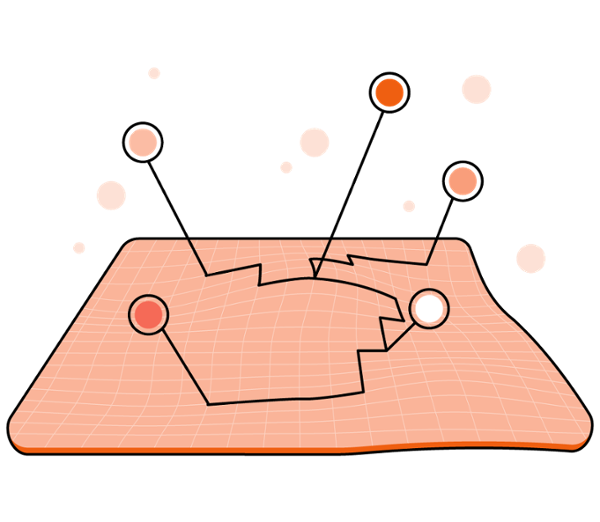
The gap between what’s possible and what’s been achieved isn’t a matter of awareness. For those who work alongside federal mission owners every day, the persistence of fragmentation reflects something more fundamental – a structural byproduct of programs, missions, and mandates that have expanded independently over time, layering systems and workflows that were never designed to connect.
The pace of technological change has added to this challenge. As new capabilities have emerged (rapidly!) over the past two decades, agencies have adopted them mission by mission, creating layers of systems that weren’t always designed to work together. The result is an enterprise where data doesn’t move freely across program offices, and systems may not communicate with each other.
Consider a single piece of evidence that triggers both an enforcement action and a FOIA request: the records team, the legal team, and the compliance team each need access to the same underlying data, yet in many agencies they’re working from separate systems, duplicating effort, and potentially introducing risk at each handoff. When leadership needs to respond quickly, those handoffs become painfully visible.
Optimization Opportunities from the GAO and GSA
The GAO’s findings point to IT duplication as a major lever: OMB and 24 agencies have been directed to implement annual portfolio reviews to cut redundant investments.
That’s a solid diagnosis, but as Brian Thompson, Relativity’s director of practice empowerment for the public sector, points out, a helpful prescription should go further than rationalizing what you spend – including by addressing how disparate workflows can be unified:
“GAO’s findings likely don’t surprise anyone who has run a federal mission portfolio. Fragmentation is the default condition, and the cost, measured by GAO at over $100 billion dollars, is only part of it. The harder cost is in response time, risk exposure, and the inability to see across the enterprise. One solution is using a single platform for many missions. For government agencies, that can mean records, FOIA, enforcement, and litigation all operating on the same e-discovery foundation, and the results can go beyond savings to facilitate an impactful change in how agencies work and deliver value to their citizens.”
The General Services Administration (GSA) just published the EOA Playbook, and it offers a useful lens here. The framework for Elimination, Optimization, and Automation makes clear that fragmentation isn't just a technology problem; it's a process problem that technology can either entrench or help resolve.
GSA's EOA program has deployed more than 190 applications enterprise-wide, estimating over two million hours of workload saved since 2019, with an even more ambitious target set for FY26 and FY27 through its Million Hour Challenge. The playbook is explicit in stating that the highest-value opportunities come from standardizing and consolidating processes across business units, not just automating the chaos that already exists.
That distinction is noteworthy for federal legal and compliance functions especially; records, FOIA, enforcement, and litigation often run parallel workflows on separate systems, each optimized in isolation, but none visible to the broader enterprise. The EOA framework would classify that as a Priority 1 opportunity – high impact, high feasibility – precisely because a shared platform provides every mission function a common foundation.
The agencies that have done this successfully share a common profile: they go in with a realistic business case that accounts for full costs, a leadership team committed for the long haul, and a clear change management plan that brings staff along rather than just informing them. The technical lift is certainly not nothing, but the organizational groundwork is what separates agencies that get lasting value from those that stall out.
Benefits of a Consolidated Tech Stack
Getting this right is a competitive advantage for agencies. Consolidating onto a shared foundation goes beyond technology decisions, becoming an opportunity to invest in modernizing and optimizing across so many mission functions. For example, as part of this process, teams might:
- rationalize and workshop workflows that have not been examined in decades.
- move data into a more secure foundation that’s built for modern compliance and chain of custody sensitivities.
- bring staff along in a way that builds lasting skills and institutional knowledge.
Procurement sequencing matters too, and agencies that plan for it – aligning contract vehicles, base periods, and option years with operational readiness – avoid the pitfalls that sometimes slow others down.
Done right, consolidation doesn’t just reduce cost. It builds the institutional muscle to respond faster, operate with less risk, and scale when the next mission requirement arrives.
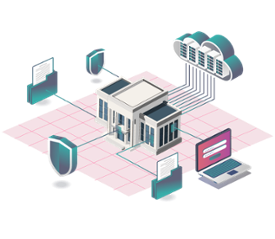
This is where Relativity's solution for federal agencies becomes concrete. The platform is purpose-built to handle numerous government legal and compliance use cases including e-discovery, records management, FOIA, enforcement, and litigation on a single, FedRAMP-authorized foundation. The recent launch of Relativity FOIA extends the same review, processing, and production capabilities that legal teams already use for litigation directly into the FOIA context.
Agencies don't need to build, procure, or integrate a separate system for each type of project; they need to extend a platform they already trust. It's the practical expression of what we call “one platform, many missions”: not a single tool that collapses every use case into uniformity, but a shared foundation that lets each mission function operate with its own workflows, permissions, and outputs, while the enterprise benefits from visibility and coordination.
The GAO report is a useful alarm, but the work of actually defragmenting a federal enterprise is a deliberate, sequenced undertaking. The agencies that do it right can come out the other side with something the report only hints at: the ability to see across their enterprise, respond at the speed of mission, and deliver real value to the public.
Graphics for this article were created by Kael Rose.
Recommended for you